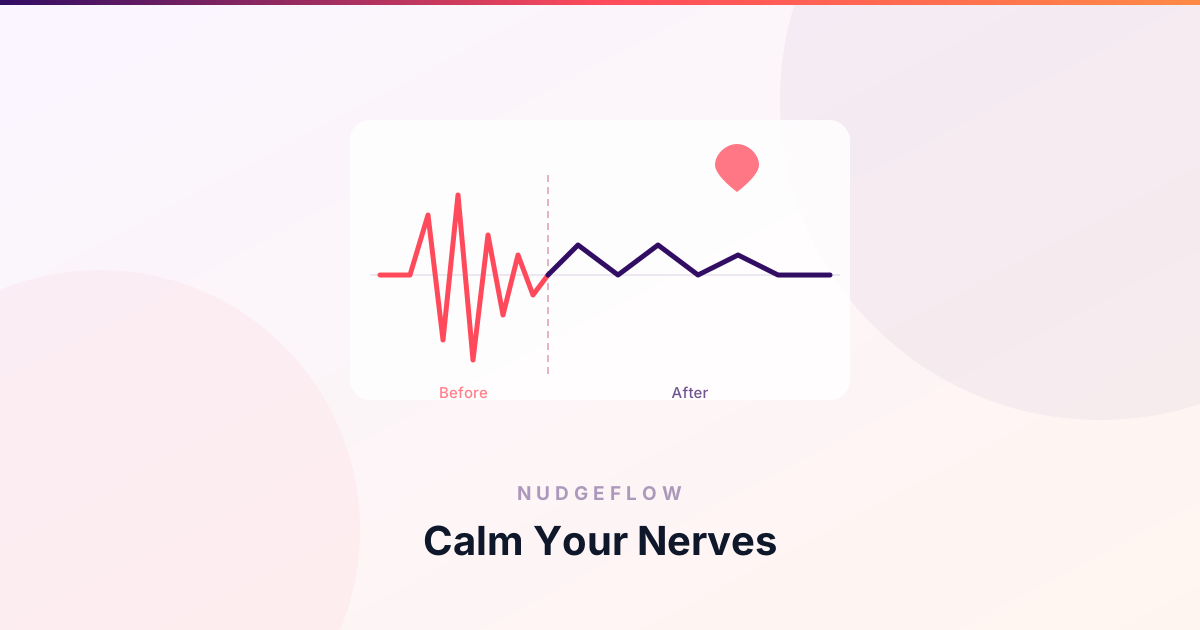
Almost everyone feels nervous before an important interview. That is not a problem to solve — it is a natural response to a high-stakes situation.
The goal is not to eliminate nerves. The goal is to feel prepared enough that nerves do not take over. There is a meaningful difference between feeling anxious because you are unprepared and feeling a manageable level of adrenaline because the interview matters to you.
This guide covers what actually helps, and what most candidates spend their time on instead.
Why you freeze, rush, or go blank
Nerves affect performance in predictable ways. Understanding them makes them easier to manage.
Freezing usually happens when a question catches you off guard, and your mind goes blank. The solution is not to have memorised every possible answer; it is to have practised enough that you have a mental framework to fall back on.
Rushing happens when anxiety accelerates your speech. You finish answers too quickly, drop important details, and come across as unsettled. Slowing down consciously, even when it feels awkward, almost always helps.
Going blank mid-answer is usually a sign that you have not practised the answer out loud enough. Writing answers down is not the same as saying them. Your brain retrieves spoken language differently from written language.
What does not help as much as people think
Reading more interview tips. There is a point at which more advice stops being useful. If you have read twenty articles on how to answer "Tell me about yourself," reading a twenty-first will not improve your performance. Practice will.
Memorising scripts. Word-for-word memorisation creates a different kind of anxiety, the fear of forgetting your exact script. Strong preparation means knowing the structure and key points of your answers, not every word.
Trying to eliminate nerves. Some level of adrenaline improves focus and performance. The research on this is consistent. You are not trying to feel calm. You are trying to feel ready.
What actually helps
Practise out loud, more than you think you need to
Saying an answer once or twice is not enough for it to feel natural. Fluency comes from repetition. Practise your key answers, especially your opening answer- until delivering them feels comfortable, not effortful.
This is particularly important for questions you find uncomfortable, like "What is your biggest weakness?" or "Why did you leave your last role?" If you avoid practising those, they will trip you up.
Simulate the real conditions
Reading your notes at your desk is very different from responding to questions without preparation time. Run at least one practice session where you sit in a chair, respond to questions in real time, and do not stop to check notes. This is the only way to experience what the actual interview will feel like.
If you can find a friend, mentor, or colleague to run a mock interview with you, take that opportunity. If not, practise against a question list and speak your answers out loud without pausing.
Prepare enough that uncertainty is not the source of anxiety
A large part of interview anxiety comes from uncertainty — not knowing what questions will come up, not being sure whether your answers are good enough, and not knowing how to handle difficult questions.
Targeted preparation reduces that uncertainty. When you have prepared your opening answer, your five strongest examples, your answers to likely difficult questions, and a list of questions to ask the interviewer, the interview becomes less unknown.
Use the time before the interview well
On the day, avoid cramming. Looking at your notes immediately before an interview increases anxiety rather than reducing it. Instead:
- Arrive with time to spare, so logistical stress is not a factor
- Avoid caffeine in large quantities if it makes you jittery
- Take a short walk if it helps you settle
- Remind yourself that the interviewer wants you to do well, they have taken time out of their day to meet you
The role of repetition
Confidence is built through repeated exposure, not through reading advice. Every time you practise an answer, it becomes slightly more natural. Every time you run a mock interview, the format becomes slightly less threatening.
This is why candidates who practise consistently feel calmer than candidates who only prepare by reading. The preparation that reduces nerves is the preparation that mimics the real thing.
Nudgeflow gives you a safe space to build interview confidence through repeated practice with an AI interviewer. You can run mock interviews as many times as you need, receive feedback on your delivery and clarity, and improve your answers before the real interview.
Frequently asked questions
Is it normal to feel nervous even with a lot of experience? Yes. Even experienced professionals feel nervous before high-stakes interviews. The difference is usually that experienced candidates have more practice managing and channelling those nerves.
How many practice interviews should I do before the real one? There is no fixed answer, but most candidates benefit from at least two or three full practice sessions where they respond to questions out loud. More is better up to the point where you feel confident and natural.
What should I do if I go blank in the interview? It is acceptable to pause and collect your thoughts. A brief "Let me take a moment to think about that" is entirely normal and is much better than rushing into a confused answer.
Does exercise help with interview nerves? For many people, yes. Physical activity on the morning of an interview can reduce cortisol and improve focus. It is worth trying if you find it helpful in other stressful situations.
What if I am nervous about a specific type of question? Practise that type of question more, not less. Avoiding the questions you find hardest ensures they will still trip you up in the real interview. Targeted practice on your weak spots is the most effective use of your preparation time.