The STAR method is one of the most widely taught interview techniques. It is also one of the most misapplied.
Candidates learn the acronym — Situation, Task, Action, Result — and then deliver answers that sound mechanical, spend five minutes on the setup, and trail off without a clear outcome. Knowing the framework is not the same as using it well.
This guide explains how to use STAR in a way that sounds natural, stays concise, and gives interviewers the evidence they are looking for.
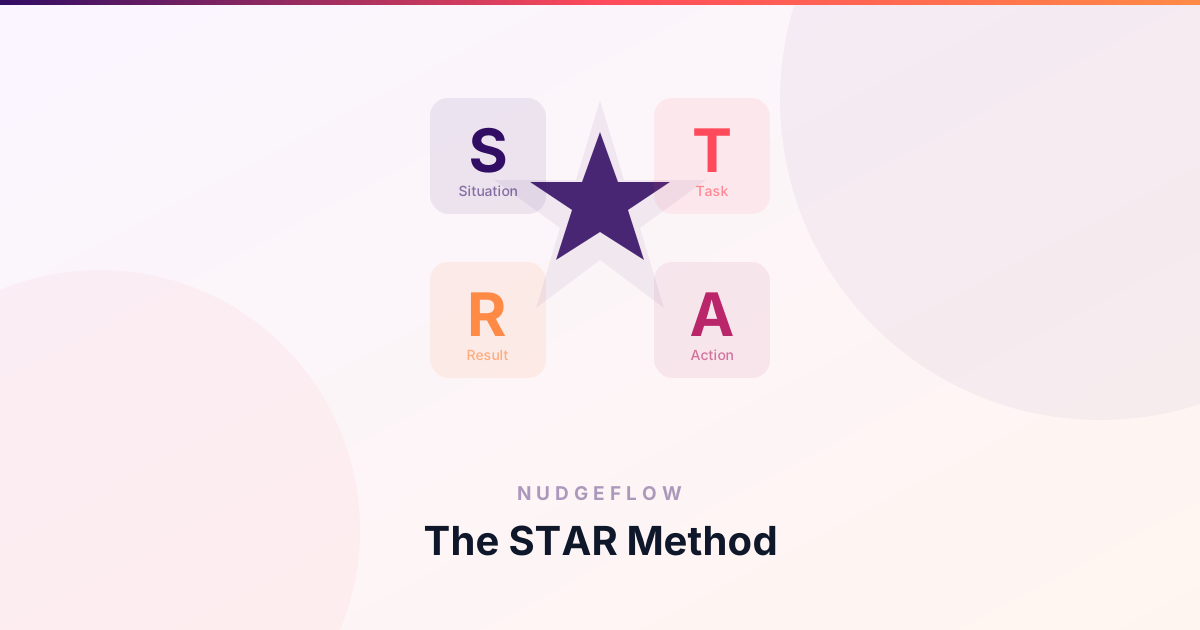
What STAR actually means
- Situation — set the scene briefly. What was the context?
- Task — what were you specifically responsible for in that situation?
- Action — what did you personally do? This is the most important part.
- Result — what happened as a result? What was the outcome?
The purpose of STAR is to help you give structured, specific answers to behavioural questions — questions that start with "Tell me about a time when..." or "Give me an example of..."
Interviewers use these questions because past behaviour is a reliable indicator of future behaviour. A vague answer gives them very little to work with.
The most common STAR mistake
Most candidates spend too long on Situation and not enough on Action and Result.
A well-balanced STAR answer should allocate roughly:
- Situation: 10–15% of the answer
- Task: 10–15% of the answer
- Action: 50–60% of the answer
- Result: 15–20% of the answer
If you are spending two minutes explaining the background and thirty seconds on what you actually did, you are not demonstrating your capabilities — you are telling a story.
The Action section is where the interviewer learns about you. Keep Situation brief and invest your time in explaining what you personally did and why.
Why STAR answers fail even when they follow the formula
Following the structure does not guarantee a strong answer. Common reasons STAR answers fall flat:
The example is too generic. Describing "a time I worked in a team" without a specific project, decision, or challenge tells the interviewer very little.
The result is missing or vague. "The project went well" is not a result. Aim for something measurable or meaningful: "We delivered the project two weeks early," "Customer satisfaction scores increased by 12%," or "The team avoided a significant budget overrun."
The Action is passive. Saying "we decided to..." or "the team then..." obscures your individual contribution. Use "I" consistently in the Action section.
The example does not fit the question. Before you start, make sure your chosen story actually demonstrates the competency being tested. If the question is about managing conflict, your example should clearly show how you handled a disagreement — not just a difficult project.
A strong STAR answer example
Question: "Tell me about a time you had to manage a difficult stakeholder."
Weak answer:
"We had a project where the stakeholder kept changing requirements. It was a challenging situation and the team found it frustrating. Eventually we sorted it out and delivered the project."
Strong STAR answer:
"I was managing a software rollout for a client whose requirements kept shifting mid-project. The team was at risk of missing the deadline. I requested a meeting with the stakeholder, walked them through the scope impact of each change request, and agreed a change-control process where any new requirements would be assessed against timeline and budget before being accepted. I also set up fortnightly check-ins to give them visibility earlier in the process. As a result, we delivered the project on time and the client rated us as one of their top suppliers in their end-of-year review."
The second answer is specific, shows personal agency, and ends with a clear outcome.
How to build your STAR story bank
Before your interview, prepare five to eight strong examples that cover a range of competencies:
- Leading or influencing others
- Managing conflict or difficult relationships
- Solving a complex problem
- Dealing with failure or setbacks
- Working under pressure or to a tight deadline
- Achieving a meaningful result
Each story should be specific enough to feel credible and flexible enough to use for multiple competency questions.
How to make STAR sound natural
The biggest risk with STAR is sounding rehearsed. To avoid this:
- Do not memorise a script. Memorise the structure and the key details of each story, then let the words come naturally.
- Practise saying your answers out loud, not just writing them down.
- Aim for conversational fluency, not recitation.
Nudgeflow lets you practise STAR interview questions and receive feedback on whether your answers are specific, well-structured, and clearly evidenced. If your Action section is too thin or your Result is vague, the feedback will show you exactly where to improve.
Frequently asked questions
How long should a STAR answer be? Two to three minutes is usually the right length. Shorter may lack evidence; longer risks losing the interviewer.
Can I use the same story for different questions? Yes, one strong example can often demonstrate multiple competencies — leadership, communication, and problem-solving can all appear in the same story. Use the same example but emphasise different elements depending on what the question is asking.
What if I do not have a strong example from work? You can use examples from university, volunteering, sports, or personal projects. The quality of the story matters more than the context.
What if my result was not positive? Interviewers sometimes ask about failure or setbacks intentionally. A story where things went wrong can be strong if you explain what you learned and what you would do differently.
Do I have to follow STAR rigidly? STAR is a guide, not a script. The important thing is that your answer is specific, structured, and evidenced. If your answer does that naturally without following the exact order, it will still land well.